Agents your risk committee can let in: an identity, a budget, a kill switch and an audit chain.
Intelligencia is a governed intelligence layer for enterprises and public bodies: an agent runtime with its controls built in, decisioning on the live record, a daily read on your market, and engineers who sit inside your operation until a named metric moves. The contact-centre stack stays where it is.
"Outside frameworks are fine if they sit inside our governance."
What a regulated buyer told us
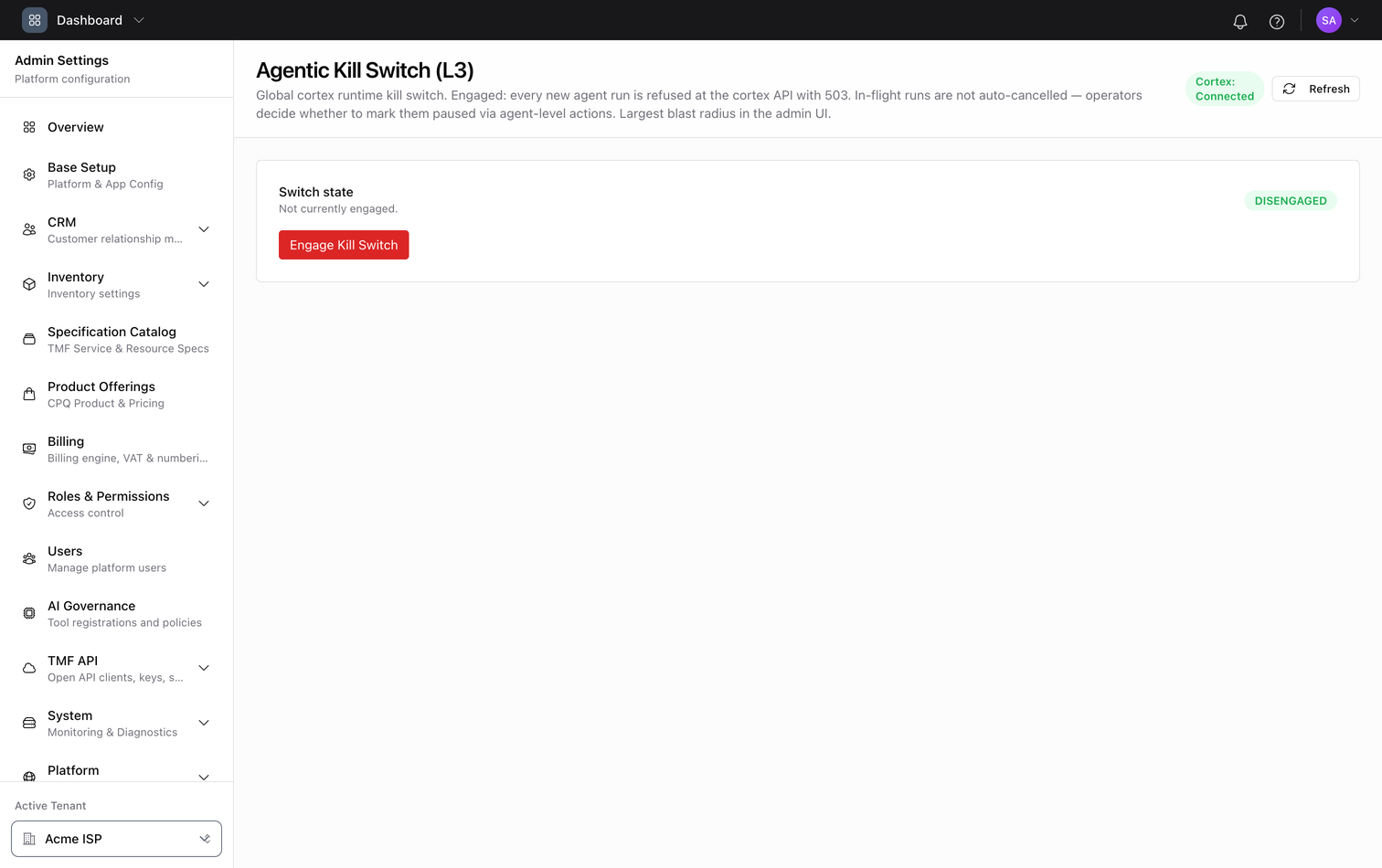
Every agent runs under a scoped identity, a delegation tree, a budget with a cost breaker, a three-tier kill switch (agent, tenant, global) and a hash-chained audit trail. Those screens exist today, and we show them.
✓ In the runtime: persisted runs, approvals, a three-tier kill switch, cost breaker and budgets, delegation trees, hash-chained audit, evals and guardrails, sandboxed connectors, an operator console.
Plate II. Decided on the live record
Decisions made on the live record, never on an export.
The live record is the current state of your customers, orders, stock, balances, claims and cases. There are two ways in. Native: where our platform holds the live record, the agents run on it directly, with nothing to integrate first. Connected: where it sits in systems you already run, Intelligencia connects to them and acts through their own order, case and ticket flows, under the same identity, budget, kill switch and audit chain. Either way, Decisioning simulates cohorts, enforces rollout safety and logs an explanation for every decision.
Where we play
Native where our platform holds the live record: telecoms and bank-owned mobile businesses, the shortest path to a number. Connected where yours does: banks, insurers, utilities and public bodies. Same governance, same ladder, same ticket. The estate stays.
Plate III. Delivered to evidence
One engineer and a governed fleet. Every task on a ticket, with its cost.
A Pod is one forward-deployed engineer, one strategist and a fleet of agents, not five billed consultants. The fleet runs on tickets: a note per stage, evidence attached, the agent cost of every task recorded. You can read the ticket.
"I am tired of time-and-materials suppliers who add roles and keep the speed AI gives them."
What a regulated buyer told us
So the ladder is priced by shape, not by headcount. Start with a four-to-six week Sprint with written success criteria; its price is credited against a Pod signed within 60 days. Five engineers on site is a services contract with software attached. We send one engineer, the fleet does the headcount, and you read its cost on the ticket.
Plate IV. Clearing the gatekeepers
Written for the risk reviewer. Read twice a day by the operator.
Regulated buyers ask how to get us through vendor risk before they ask what the agents do. One pack answers it, and we bring it to the first call, so the call is about your workflow. The Desk, meanwhile, puts an operator's read on telecoms, AI, infrastructure and policy in front of executives twice a day.
"Which entity am I buying from?"
What procurement asks first, and what the pack answers
One pack answers that, the terms and the data boundary. It comes to the first call.
The operator console, as shipped
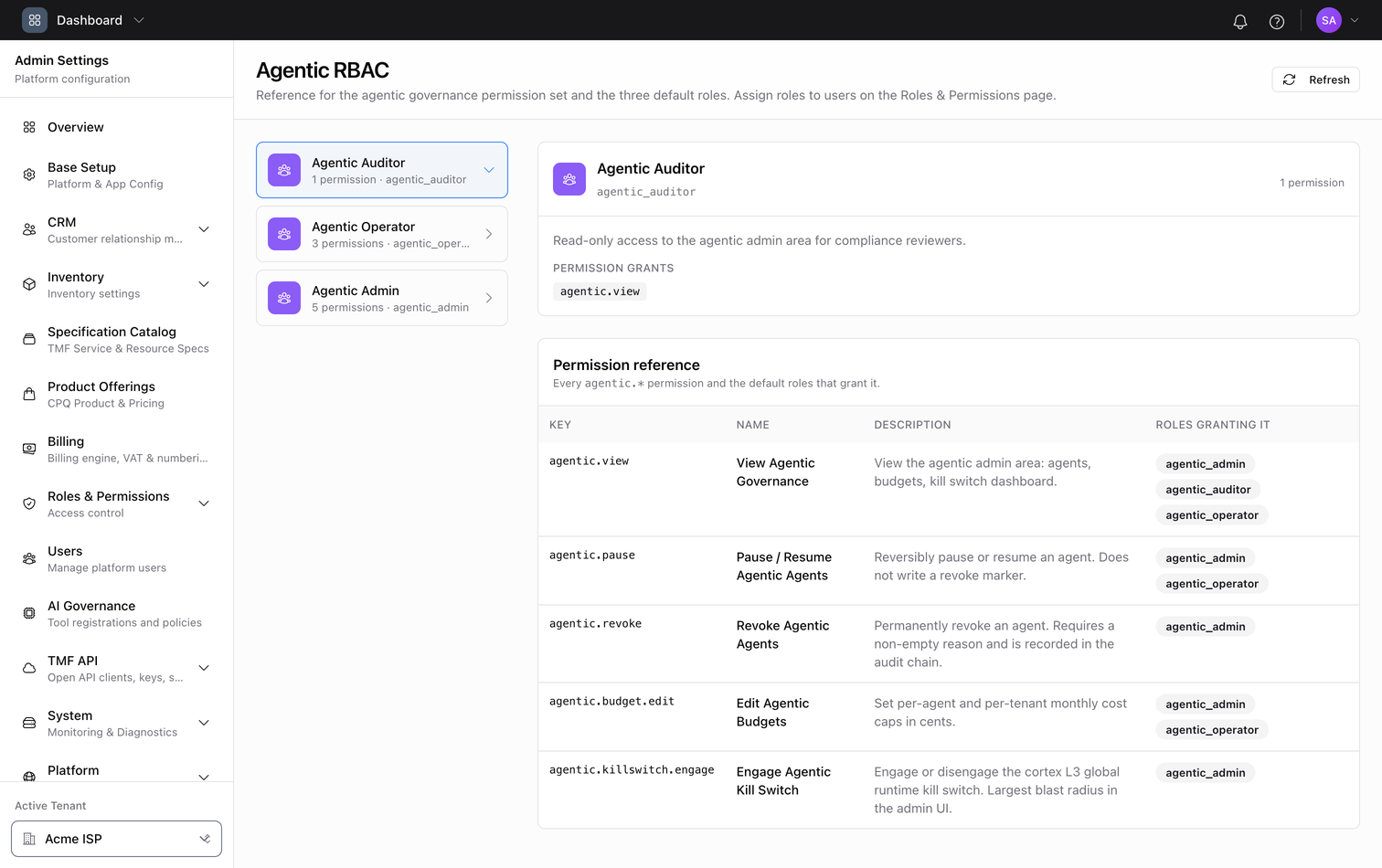
Fig. I. The runtime sits behind the contact centre; every agent action is chained to an identity and a kill switch. Traced from the operator console. Peel the corner to see the real screen.
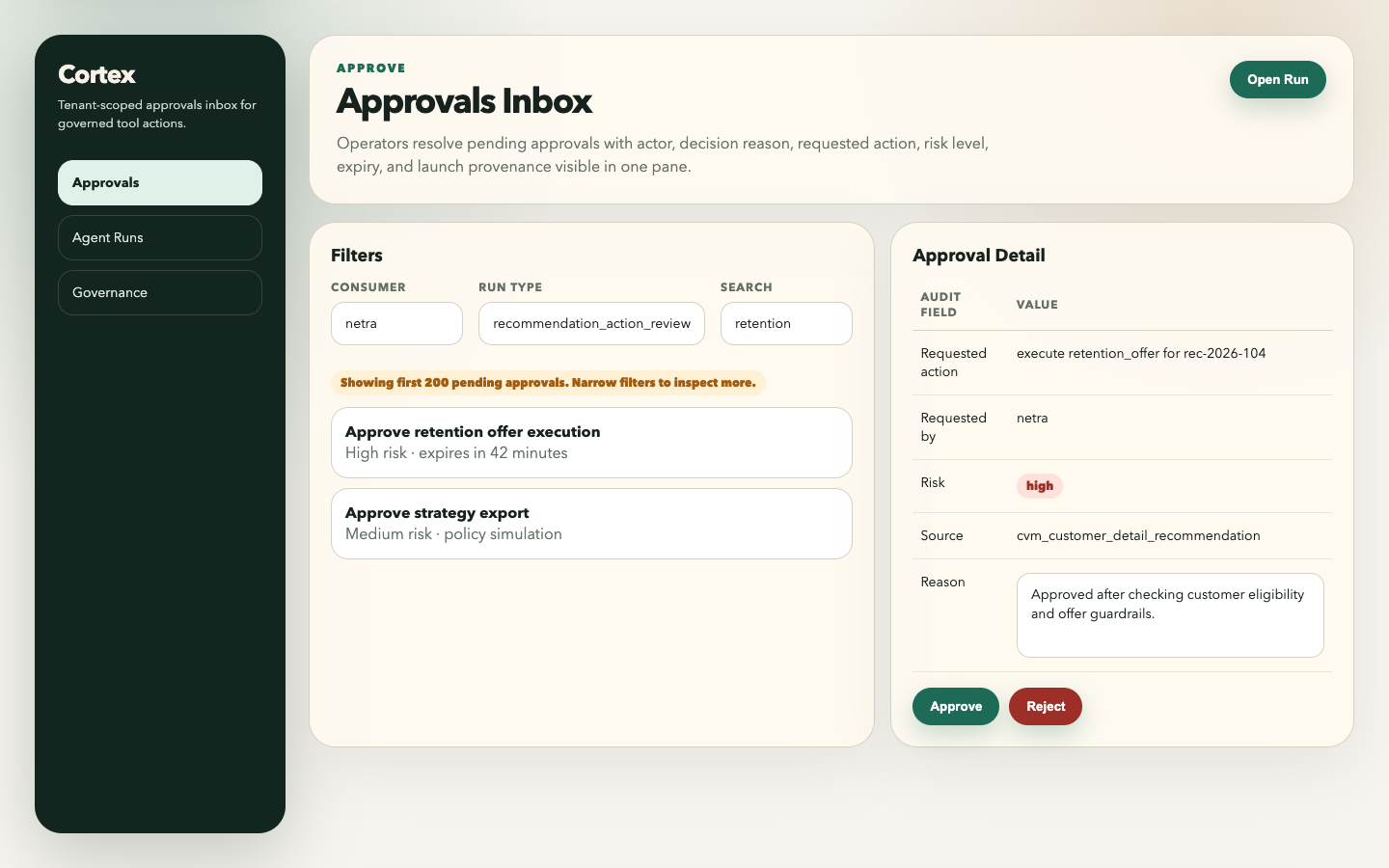
The approvals inbox, as shipped
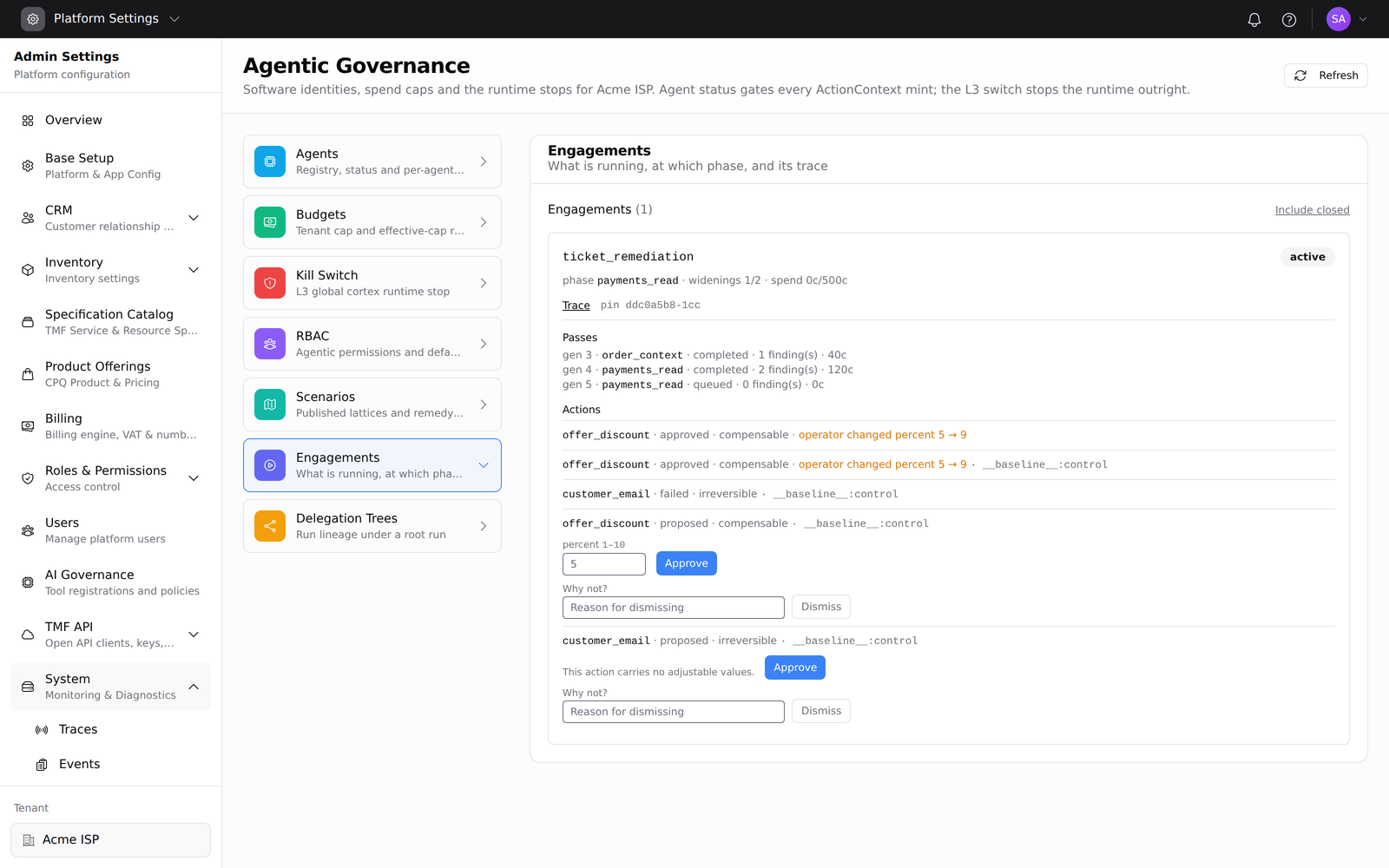
Fig. II. The decision, its risk, its source and its reason in one pane, read from the live record.
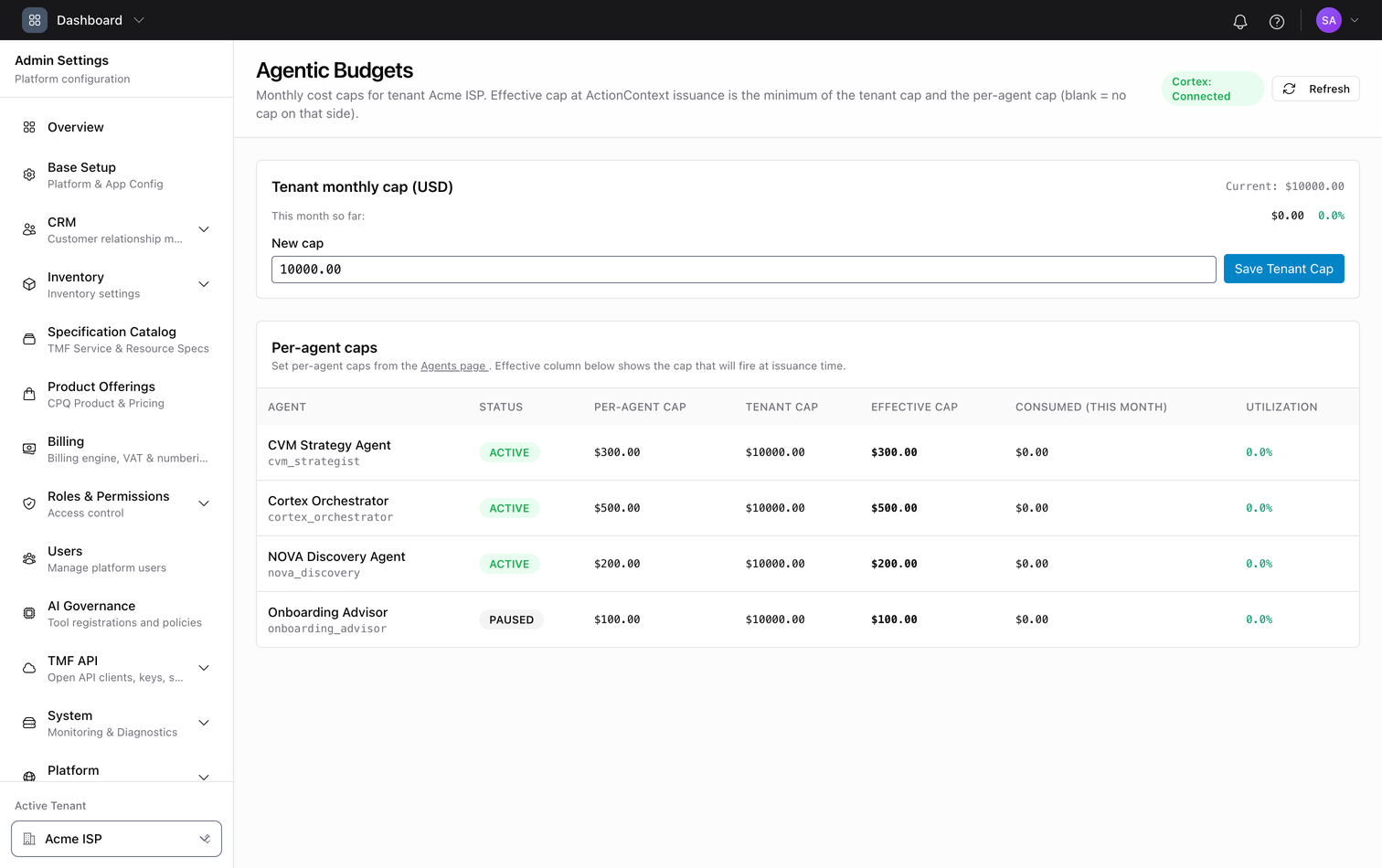
The budgets screen, as shipped
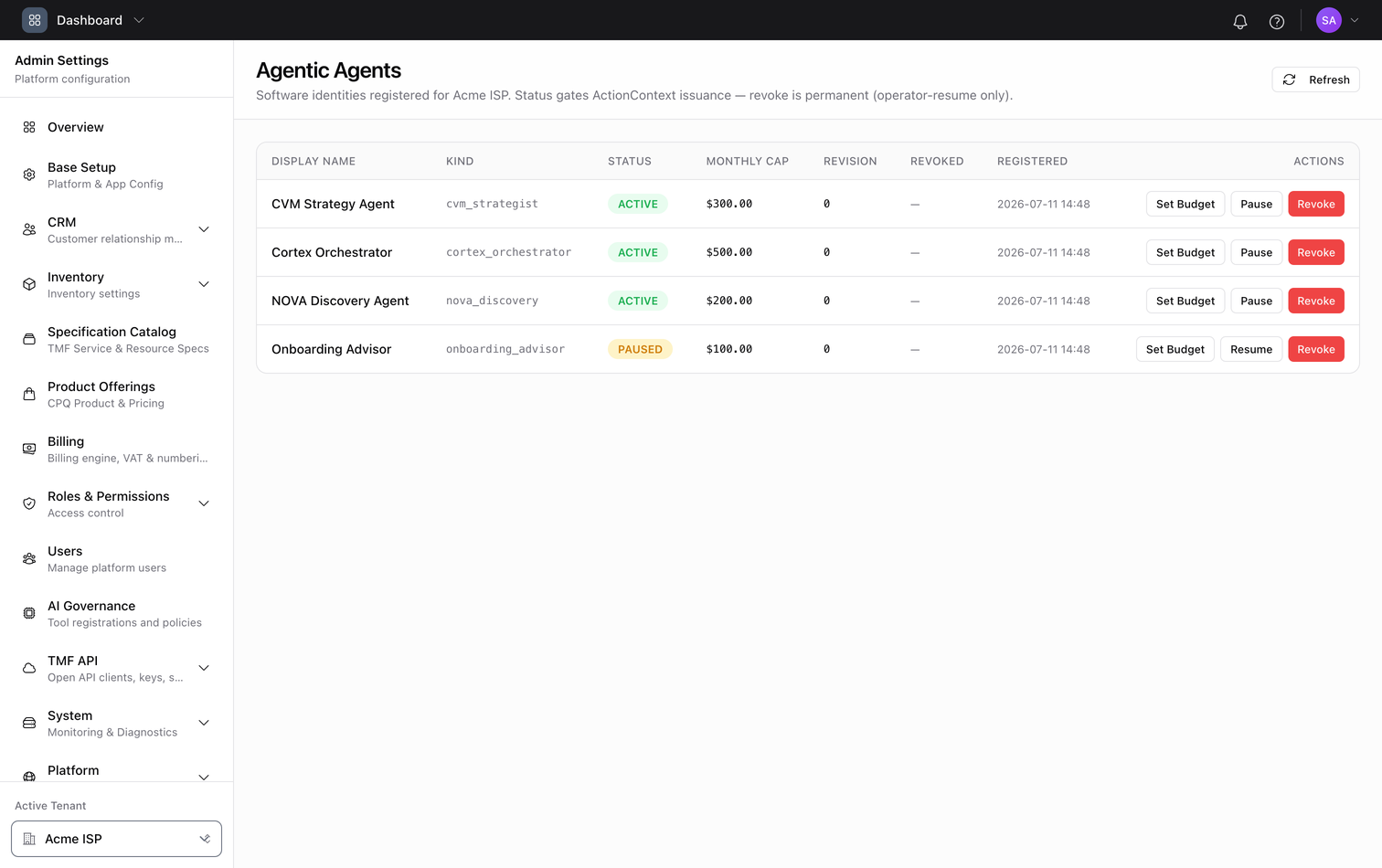
Fig. III. The customer reads the caps, the ticket, the cost of each task.
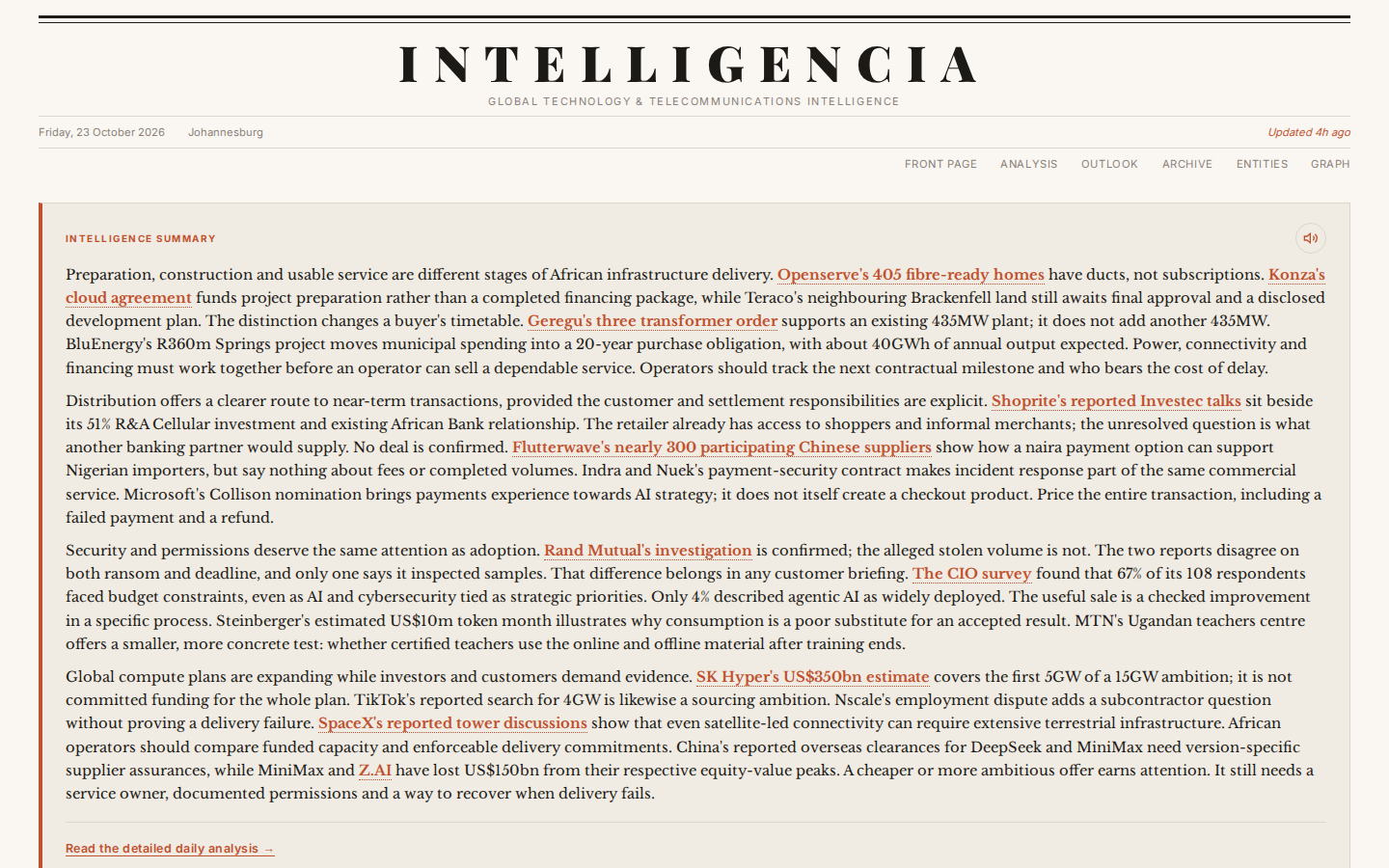
The Desk, Tech edition, today
Fig. IV. Procurement and risk answered on page one; the operator's read delivered twice a day.
Workflows, by sector
We do not sell a licence and walk away. Each workflow is contracted against a named metric.
Every vendor lists the same workflows. The difference is where they run: on the live record, under governance. The first six run native, on a live record our platform already holds. The rest run connected, through the systems you already run. Choose a plate to open the scoping sheet with it filled in.
Connected: through the systems you already run
Examples, scoped per engagement. Each starts with a Sprint that maps the live record in your estate and names the metric before anything is built.
The delivery ladder
Delivered to evidence. One engineer and a governed fleet, never five padded roles.
Every engagement runs on a ticket: a note per stage, as-built evidence attached, the agent cost of each task recorded. The Sprint price is credited against a Pod signed within 60 days.
Governed, so it can be allowed in
What your risk reviewer sees before the first workflow runs.
Every control below is in the operator console today. Contracting, procurement and the data boundary are in the vendor-risk pack, which we bring to the first call.
Capability
What the risk reviewer gets
Runtime
Persisted runs, approvals, a three-tier kill switch (agent, tenant, global), cost breaker and budgets, delegation trees, a hash-chained audit trail, evals and guardrails, sandboxed connectors, and an operator console that shows all of it.
Decisioning
Live customer state from the live record, recommendations, strategies, cohorts, simulation before rollout, an explanation for every decision, and the audit of each. It sits behind your channels and does not replace them.
Models and cloud
Model calls go to the provider you choose: Anthropic's API, Amazon Bedrock in your own account, or any OpenAI-compatible endpoint, including one you host in-country. The runtime deploys inside your own cloud account. HTTP connectors into your systems.
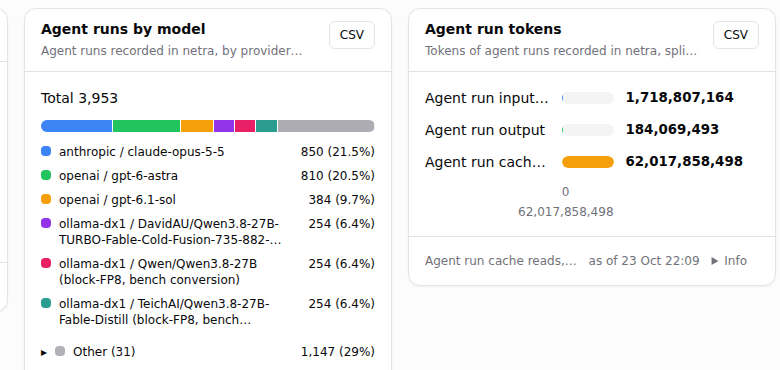
From the console, this month
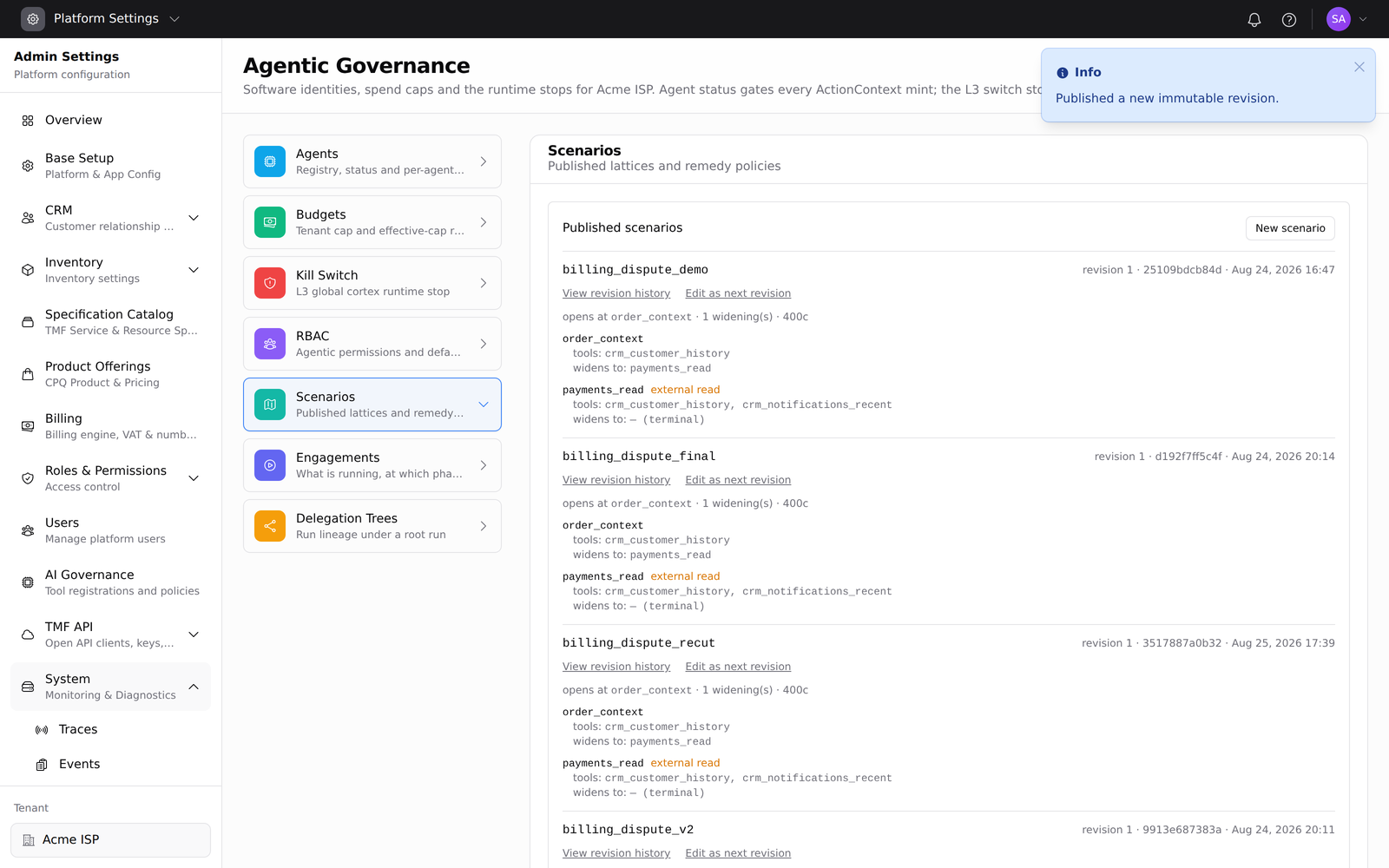
Agent rolesAuditor, operator, admin. Who may pause, revoke, set a budget or engage the switch.Agent identitiesRegistry, status, cap and revision. Pause, resume or revoke.Governance profilesPublished lattices: which tools at which phase, what may widen, the spend cap.Decisions on the recordAn engagement: phase, spend against cap, and the actions an operator approves or dismisses.MeteringRuns by model and tokens in, out and cached. Our own engineering tenant.
The operator's read, twice a day
Telecoms, AI, infrastructure and policy. Africa first, then GovTech and the Gulf.
The Desk is the part of Intelligencia already in daily use: curated storylines refreshed at 07:30 and 14:30 South African time. The editions are private today. Ask for access.
Where we sit
Four kinds of vendor sell operators AI agents. We are a fifth, and it is narrower.
Each of the four does something we do not. Each leaves something we do. This page says which is which, so the first call can be about your workflow.
Channel agents
The vendors who answer the phone
Voice, chat and messaging agents with proof in contact centres. They integrate into billing and CRM through APIs, and they are good at it.
Where we sit: behind the channel. We decide what the answer should be, from the live record, and we act through your order, case and ticket systems. Your contact-centre stack stays.
We never claim voice or chat.
Agent layers over the estate
The suite vendors' agent layers
The big suites now ship an agent layer over the stack you have. It reads the stack's state and acts through its tickets. In connected mode, so do we.
Where we sit: the governance travels with the agent. Identity, budget, kill switch and audit chain apply to every action, whichever system it lands in. And where our platform holds the live record, there is nothing to integrate first.
We never claim a multi-year platform replacement.
Builders in the cloud
CRM and hyperscaler agent studios
Prebuilt agents and builder studios from the CRM and cloud vendors, with the model and the data platform behind them. You assemble the governance.
Where we sit: governance is shipped, not assembled. Identity, budgets with a cost breaker, a three-tier kill switch, delegation trees and a hash-chained audit arrive wired to the live record. Models: Anthropic, Amazon Bedrock, or any OpenAI-compatible endpoint you host.
We never claim to be a model.
Pods and integrators
Forward-deployed teams and the big firms
Pods of engineers and strategists on site, in every market, handing over after three phases. Proven, and priced like a services business, because it is one.
Where we sit: one engineer, one strategist and a governed fleet of agents. The fleet does the headcount and its cost per task is on the ticket. The Sprint is credited against the Pod.
We never bill five roles for one workflow.
Enterprises and public bodies are told their AI will fail on data readiness. Ours starts from the live record you already keep: customers, orders, stock, balances, claims, cases. The Desk reads your market twice a day. The team sits in your operation.
What we never claim
Voice or chat channels. We sit behind yours.
Autonomy as the pitch. Governance first; autonomy climbs the ladder.
A model of our own. We route to providers and say which.
A platform replacement programme. One workflow, one metric, then the next.
A number we have not measured. Each engagement produces its own.
The scoping sheet
Tell us the workflow. We reply with two times for a call.
SCOPING BRIEFINTELLIGENCIA
WHO: Operator: telco, fibre, MVNO or MVNE
WORKFLOW: Billing resolution
START: Sprint: 4 to 6 weeks, fixed price, credited against a Pod
PEOPLE AND FLEET: One engineer, one strategist, a governed fleet of agents, every task on a ticket
Lands with the team by email and chat. We reply with two times.